English| EUR
Suggested for you
More currencies
Choose a language
Two turquoise lakes, one mountain range, and a question that fills Banff search bars every summer. They photograph alike, sit within a short drive of each other, and share the same glacial blue signature — yet they are not one place. This page settles the confusion and explains what the distinction means for a day of planning.
Quick answer
No. Lake Louise and Moraine Lake are two separate glacial lakes in Banff National Park, roughly 14 kilometres apart by road, each with its own shoreline, trail network and access point. Both sit within the Lake Louise area of the park, which explains the mix-up. Moraine Lake is seasonal and snowbound in winter; Lake Louise stays reachable year-round.
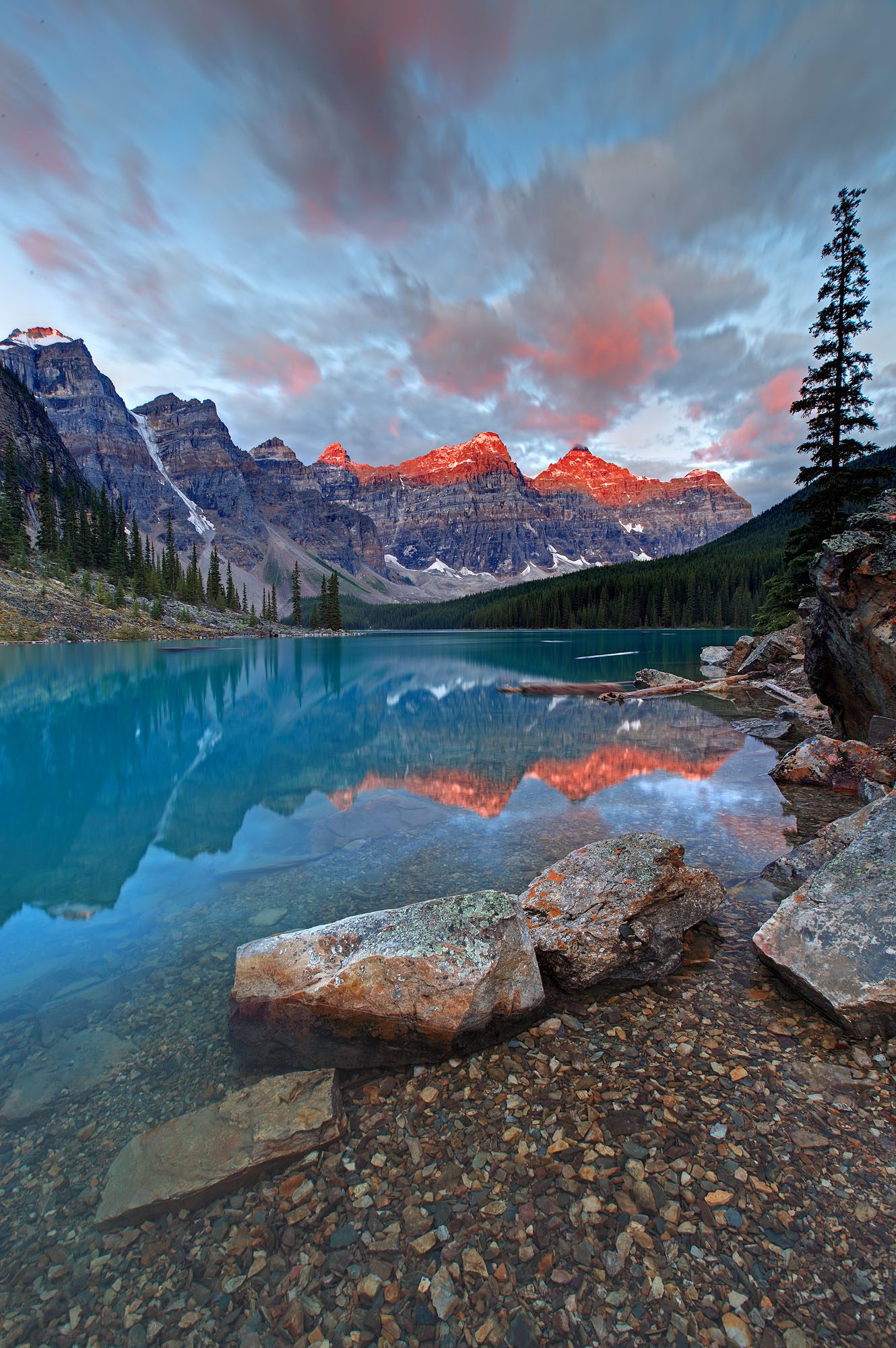
Moraine Lake holds no permanent inflowing river. It fills from snowmelt and glacial seepage in the Valley of the Ten Peaks, which is why its water level climbs through June and peaks in late summer — and why photographs taken in early June can show a shrunken, half-empty basin. That single hydrological quirk is the clearest proof that the answer to is lake louise and moraine lake the same is no. Lake Louise, fed steadily by the Victoria Glacier, keeps a consistent shoreline from thaw to freeze. The confusion is geographic rather than careless. Both lakes fall inside the hamlet's catchment area at the address Banff National Park, Lake Louise, AB, Canada, and both branch from the same corridor off the Trans-Canada Highway. Travellers searching for Banff landmarks routinely find the two lakes stacked in the same image galleries, tagged with the same turquoise colour cast produced by suspended rock flour. But the settings differ sharply. Lake Louise sits beneath Mount Victoria with a groomed lakefront promenade, canoe dock and the Plain of Six Glaciers trailhead. Moraine Lake lies deeper in, ringed by the ten summits of the Wenkchemna Peaks, reached by the Rockpile Trail — the vantage point printed on the old twenty-dollar note. Season is the second dividing line. Moraine Lake Road closes under snow through the cold months and reopens once avalanche risk drops, typically from late spring into October. Lake Louise remains accessible year-round, and its frozen surface becomes a skating rink in winter. Anyone comparing a Lake Louise and Moraine Lake tour against a single-lake visit should plan around that window first; in August 2026 both are open and running at full seasonal demand. What follows from all this is practical. Treat them as two stops, not one — separate parking systems, separate arrival timing, separate walking commitments. Reaching both in a day is entirely normal and most visitors do exactly that, but it requires sequencing rather than improvisation. The sections further down this guide break out the transport arrangements, the recommended arrival window, the park pass structure and the operating hours for each site. Read those before locking in a date. For visitors still asking is lake louise and moraine lake the same after seeing them side by side, the shorelines answer it faster than any map: one is a wide alpine amphitheatre, the other a narrow rockslide-dammed pool.
“One is a wide alpine amphitheatre, the other a narrow rockslide-dammed pool — fourteen kilometres and one road apart.”
Lake Louise and Moraine Lake are distinct destinations located within Banff National Park, accessible via Lake Louise Drive. Because private vehicle access to Moraine Lake is restricted, the most reliable approach is utilizing the Parks Canada shuttle system.
Trans-Canada Highway (Highway 1) to Lake Louise Drive
Parks Canada shuttle from Lake Louise Park and Ride
Private transport to Lake Louise area
To secure access, travelers should prioritize the shuttle system as Moraine Lake Road is closed to personal vehicles. Visitors are encouraged to align their travel with the recommended arrival window of 06:30–08:00 to manage congestion.
Access to Lake Louise and Moraine Lake requires a valid Parks Canada entry pass for Banff National Park. These fees are separate from any costs associated with shuttle services or parking facilities.
Verdict: A typical adult pays 12.25 CAD for a daily park pass, though costs vary based on age group or family status.
Lake Louise and Moraine Lake are accessible daily, maintaining consistent operating hours throughout the week within Banff National Park.
Everything you need to know about is lake louise and moraine lake the same
No, they are distinct geographical locations within Banff National Park. While both are famous glacial lakes, they occupy different valleys and require specific travel arrangements. Many visitors research is lake louise and moraine lake the same to understand if they can be seen on the same trip.
These two locations are approximately 14 kilometers apart. They are separate destinations that require a shuttle or private transport to navigate between them.
Yes, transport logistics differ for each location, especially since personal vehicle access to Moraine Lake is restricted. Understanding if is lake louise and moraine lake the same helps travelers plan their bookings effectively.
Parking availability varies significantly between the two sites. While Lake Louise has a larger parking area, it fills very quickly, and Moraine Lake is closed to private vehicles, meaning shuttle access is the primary way to visit both.
Yes, it is possible to visit both in one day with proper planning. Many tourists inquire if is lake louise and moraine lake the same to determine if they need a full day for each or if they can combine them.
They are located about 14 kilometers apart via the Moraine Lake Road. This road connects the two areas, though access is limited to shuttles and authorized transport services.
The daily park pass of 12.25 CAD covers entry to the national park area. Please note this fee excludes the separate costs for shuttle reservations or parking at Lake Louise.
No, their access rules differ significantly. Because Moraine Lake restricts private vehicles, visitors often ask if is lake louise and moraine lake the same to clarify how to secure the necessary shuttle bookings for each site.